Casino Culture in Ninh Bình Beyond the Venue Description
Casino culture in Ninh Bình makes more sense when read through the province’s heritage, public language and visitor context, without treating promotion as local custom.
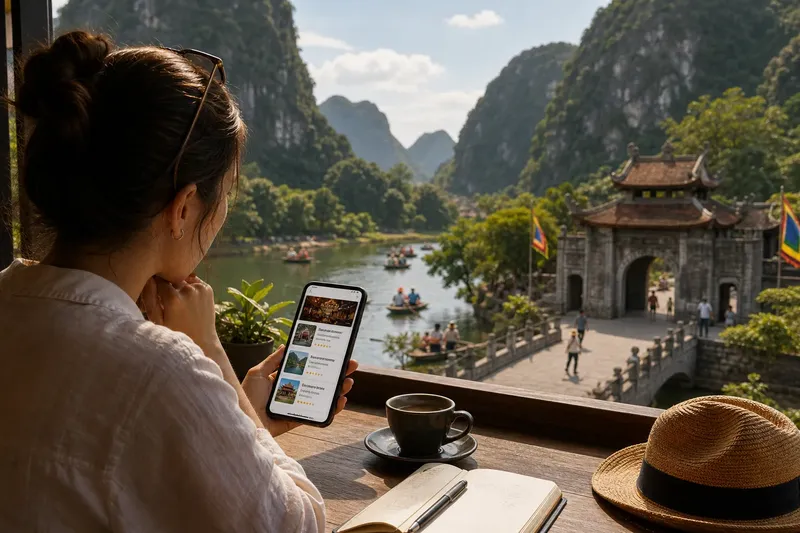
At a café in Ninh Bình, a visitor scans an evening listing after a day among limestone hills and temple courtyards. The phrase “casino culture in Ninh Bình” may appear beside other leisure suggestions, but its presence raises a question rather than settling one: is the listing describing an operator’s offer, a visitor activity or a local custom?
Those meanings need different kinds of evidence. Ninh Bình’s public identity is strongly associated with landscapes and heritage sites such as Tràng An, Tam Cốc and Hoa Lư. Gambling can be discussed as part of visitor information or public language without being treated as a defining feature of the province or its communities.
What does casino culture in Ninh Bình describe?
The phrase is most useful when it prompts close reading: how is gambling presented, what can a visitor verify, and what is actually documented about local history or social life? An answer about a venue does not automatically answer the other questions.
A listing can show how an operator frames an activity. It cannot establish how residents view gambling, how common it is, or whether it has a local cultural history. Those are distinct claims, and each needs a source that directly addresses it.
How does gambling sit beside Ninh Bình’s heritage?
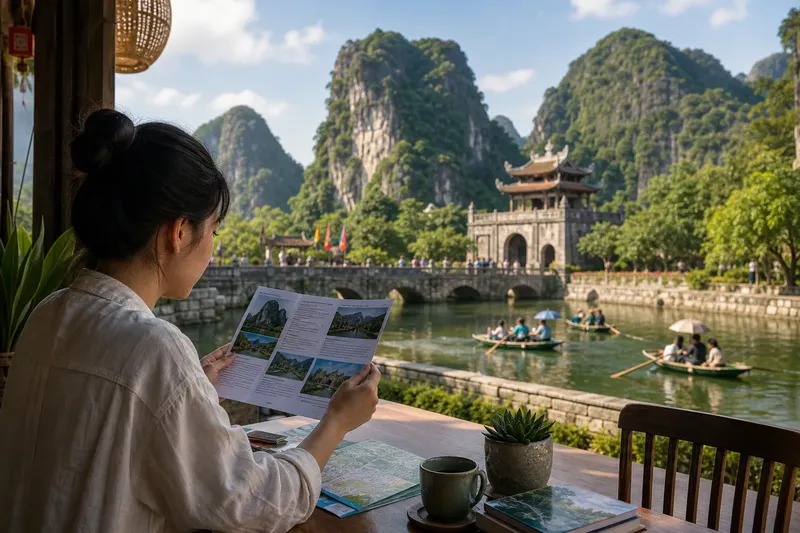
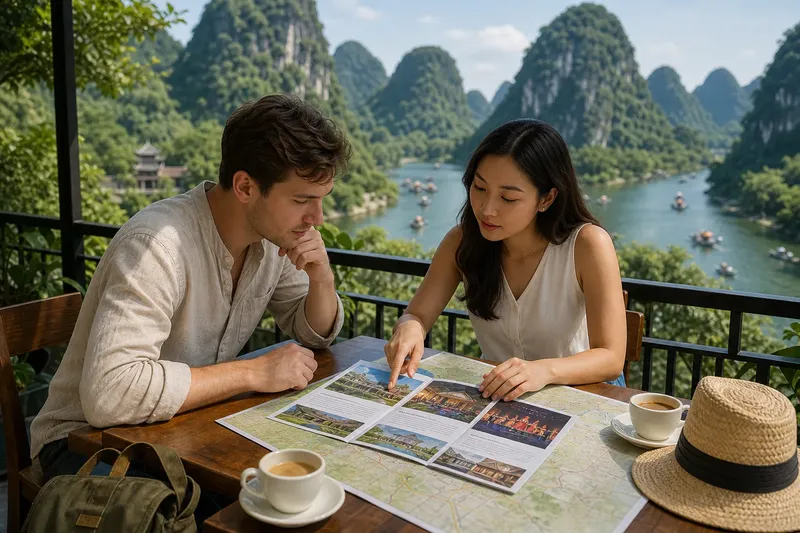
A visitor might organise a day around Tràng An’s waterways, Tam Cốc’s landscape or the historic setting of Hoa Lư, then look for an evening activity. That itinerary reflects one person’s choices; it does not make entertainment listings culturally equivalent to heritage sites or represent the priorities of local residents.
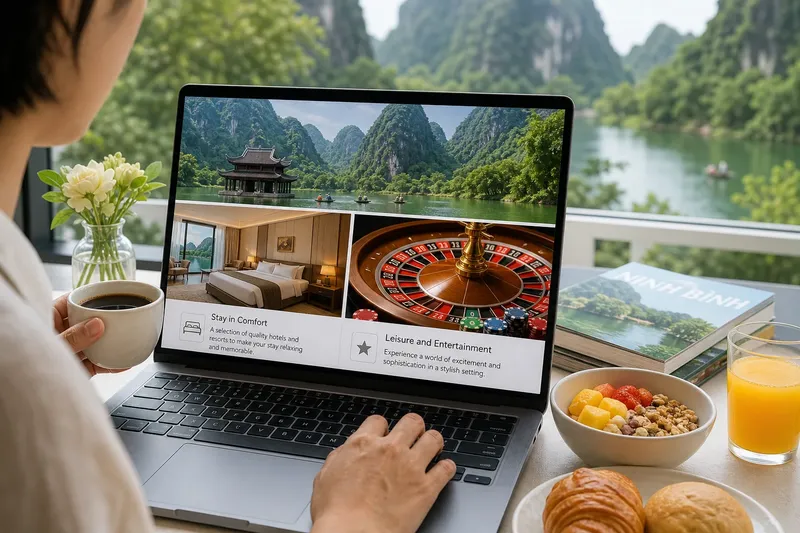
It helps to name the setting precisely. A page may use a temple image or a reference to regional history to attract attention, while offering no evidence that the promoted activity has a historical connection to that place. Treat the image as presentation unless a focused cultural source documents more.
There is little value in interpreting every decorative motif or slogan. Spend attention on claims that would change your understanding of local history or affect a visitor decision; let atmosphere-setting language remain atmosphere-setting language.
Which parts of a gambling listing are useful to a visitor?
Concrete information is easier to assess than broad cultural language. A named location, stated service, entry condition or contact route can help with planning, but it remains information about that particular operator and may need confirmation.
- Observation: The listing names a venue and gives a location. If the location matches current operator information, then use it as a planning detail; otherwise, confirm the address before travelling.
- Observation: The page describes a specific service. If the wording is clear and current, then treat it as the operator’s stated offer; otherwise, ask the operator what is actually available.
- Observation: Entry or eligibility conditions are stated. If they are explicit, then compare them with relevant official guidance; otherwise, seek clarification from an appropriate official source before making plans.
- Observation: A page uses words such as “authentic” or “traditional” without naming a practice or source. If a dedicated heritage source explains the claimed connection, then describe that connection narrowly; otherwise, treat the words as promotional framing.
- Observation: A report discusses gambling but does not say whose views or which setting it covers. If its scope is clearly identified, then keep your account within that scope; otherwise, do not use it to describe general local opinion.
- Observation: Cultural imagery appears beside a gambling offer, with no explanation of a link. If an independent cultural source documents the connection, then state only what that source supports; otherwise, separate the visual presentation from cultural evidence.
How can you distinguish cultural claims from promotional language?
Start by identifying what the sentence is trying to establish. “The venue offers an evening activity” is a claim about an operator. “The activity is rooted in local tradition” is a historical or cultural claim. The second cannot be inferred from the first, even when the same page presents both.
For a cultural claim, look for a source that names the practice, place and context rather than relying on a general tourism page. For current facilities or access details, consult the operator and, where eligibility or rules matter, relevant official guidance. Keep each conclusion within the source’s stated scope.
What questions help separate context from promotion?
Does a casino listing establish a local tradition?
No. A listing shows that an offer is being presented to an audience, not that it has a documented place in local history. A cultural claim needs a source focused on the relevant community or heritage.
Does heritage imagery prove a connection to gambling?
No. An image can suggest an association without documenting one. Look for a source that explains the specific historical or cultural link before repeating it as fact.
How should a visitor treat a venue’s access details?
Read them as information about that venue, not the province as a whole. If a condition affects your plans, confirm it with the operator or an appropriate official source.
What if a page mixes history and entertainment promotion?
Separate the historical statements from the sales language, then check each against a source suited to that claim. If the page does not make the distinction clear, avoid repeating its promotional wording as cultural evidence.
What does a worked reading of a listing look like?
Imagine a fictional visitor page with one evening offer near a named heritage attraction. Its headline calls the offer a “traditional night of gaming”; the page gives the venue name and location, but cites no history. The starting information is therefore one promotional phrase, one named location and no cultural source.
First, record the headline as the operator’s wording rather than as an established fact. Next, check the named venue and location against current operator information; if they agree, use those details only for planning. Then look for a heritage source that specifically connects the described gaming activity to the attraction or a local practice. In this invented situation, none is provided, so the resulting judgement is that the page makes a tradition-themed claim without supporting it. The visitor can still consider the stated offer, but should not describe it as a documented local custom.
Read casino culture in Ninh Bình through the kind of evidence each claim requires: operator information for an offer, official guidance for relevant access conditions, and focused cultural sources for history. That distinction lets a visitor understand what a page actually says without asking a venue description to speak for an entire place.