Casino Culture in Ninh Bình: Reading the Difference Between Image and Place
Casino culture in Ninh Bình can be read through visitor language and imagery, helping you separate cultural framing from practical information about a place.
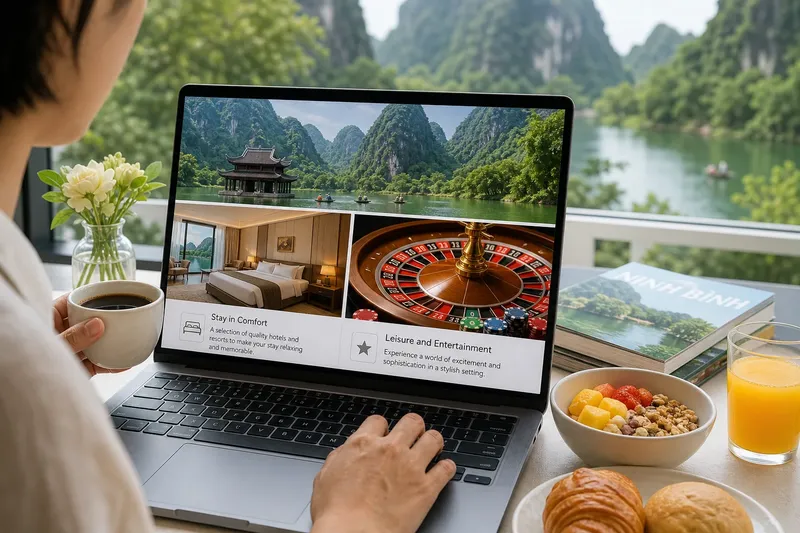
A visitor scans a Ninh Bình travel page over breakfast and spots a roulette wheel beside a photograph of a hotel. The image makes a casino setting easy to recognise, but the page’s wording and local context determine what the reference actually says. Casino culture in Ninh Bình is best approached by asking how familiar symbols travel through tourism, media and translation—not by treating them as a complete account of the region.
How does local context change the meaning of casino imagery?
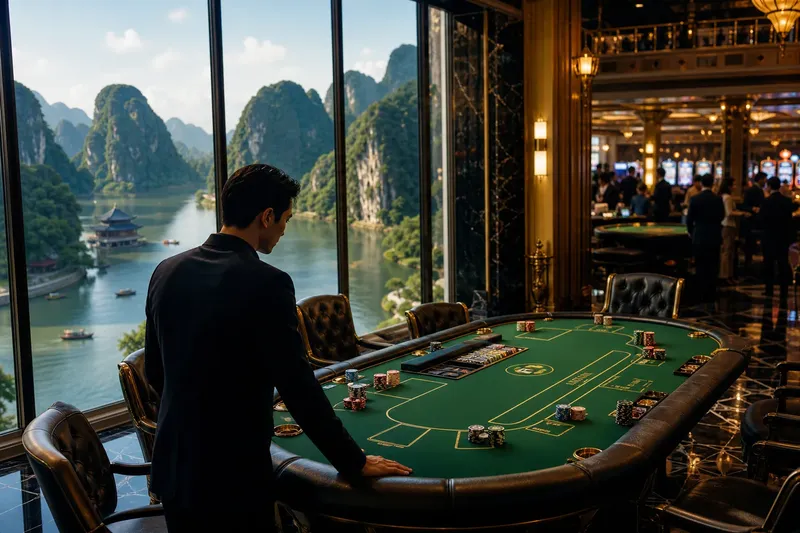
Ninh Bình is commonly associated in visitor material with its landscapes, historic sites and cultural destinations. Casino imagery, by contrast, often draws on a visual vocabulary familiar from films and advertising: playing cards, roulette wheels, dramatic lighting or a grand entrance. When these signs appear alongside information about the region, they may create a mood without explaining anything about local customs.
This contrast is useful to notice. A travel page can place a recognisable casino image beside a destination to suggest leisure or luxury, while its written information focuses on accommodation or sightseeing. Reading the two elements separately helps reveal how the page constructs an impression of place.
What can a casino image communicate?
Images communicate through selection. A close-up of cards may suggest risk or suspense; a polished reception area may suggest exclusivity. Those associations belong to the image’s visual framing, not automatically to the location beside it.
Different formats also shape meaning. A film uses a casino as a setting for a story; an advert may borrow its glamour; a visitor page may use an evocative photograph to hold attention. It is not worth assigning a precise Ninh Bình tradition or custom to a decorative detail unless the source explains that connection.
How should you read casino-related words?
Terms such as “private”, “exclusive” and “luxury” are promotional or descriptive words, not complete explanations of access or local practice. A mention of a casino may refer to a film, a general topic, a translated phrase or a specific place. The surrounding sentence matters: look for the subject, the source and the reason the term appears.
Translation can add another layer. A word may have a narrower or broader sense in the original language than it does in an English rendering. If a page gives no explanation, keep the interpretation open rather than turning one label into a claim about Ninh Bình’s culture.
How do media frame casino culture in Ninh Bình?
Media framing is the selection of images and words used to guide an audience’s attention. In a tourism feature, casino motifs might appear as shorthand for glamour; in a news story, the same motif could accompany a discussion of policy or public debate. The image may be similar, while the purpose and meaning differ.
For a careful reading, note what the material actually centres: a landscape, a person, a building, a game or a general idea. Then ask whether the caption or text connects that subject to a particular place. This approach makes it possible to discuss how casino imagery is presented in relation to Ninh Bình without treating a visual association as a local cultural fact.
Which questions help explain a casino reference?
Does a casino image show a Ninh Bình custom?
Not on its own. It shows a visual choice; a source would need to explain and support any claimed connection to local practice.
Why might a visitor page use casino imagery?
It may be using a familiar visual cue to suggest excitement, leisure or luxury. The surrounding text can clarify whether the image is illustrative or tied to the subject being described.
What should I do with an unclear translated term?
Read the full sentence and check whether the source explains the term or identifies its subject. If the meaning remains unclear, treat it as ambiguous rather than assigning it a local significance.
Can a film explain casino culture in Ninh Bình?
A film can show how its creators choose to depict casino settings. It does not, without further context, explain local customs or the way residents understand those images.
What should you check when reading casino references?
- Check whether the text identifies its subject as a place, a film, an advert or a general theme; if it names a specific subject, interpret the reference in that context, and if it does not, treat it as broad framing rather than a local claim.
- Check whether a caption explains what an image depicts; if it does, use that explanation to understand the image, and if it does not, regard the image as illustrative and avoid assigning it a local custom.
- Check whether the source explains why casino imagery appears beside Ninh Bình material; if it does, assess that stated connection, and if it does not, read the pairing as a visual association rather than an established cultural link.
- Check whether words such as “private” or “exclusive” come with a definition; if they do, use the stated meaning, and if they do not, avoid inferring access rules or social practices.
- Check whether a translated term is explained in its surrounding passage; if it is, follow that context, and if it is not, retain the original uncertainty instead of treating the word as a settled local label.
- Check whether a cultural claim names its source or basis; if it does, consider what that source can support, and if it does not, describe the material’s impression without repeating the claim as fact.
What does a careful reading look like in practice?
Say you are reading an invented visitor page for Ninh Bình. It has one hotel photograph, one roulette-wheel image and a caption that identifies only the hotel photograph; its text discusses sightseeing and gives no explanation for the roulette image. You note the two images separately, read the caption, and compare each image with the page’s written subject. The resulting interpretation is that the page combines hotel and casino imagery, while leaving the reason for that pairing unstated; you can describe its visual framing, but not infer a local casino custom from it.
Casino culture in Ninh Bình can therefore be explored as a question of representation: which symbols appear, what language accompanies them, and how the regional setting shapes their reading. Keeping those points distinct makes cultural commentary more precise—and leaves room for the local context to be described on its own terms.