How Casino Scenes Shape Stories About Ninh Bình
Read casino scenes set against Ninh Bình through camera, sound and plot, and separate a fictional portrayal from reliable information about the region.
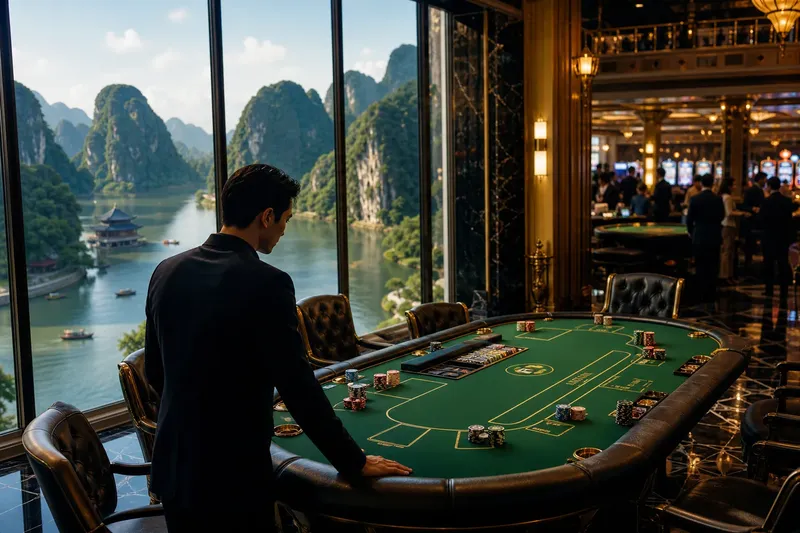
A character pauses at a green table as the soundtrack tightens into a low pulse. In a drama invoking Ninh Bình, that moment may make a casino feel like a crossroads between travel and risk. To read casino scenes about Ninh Bình carefully, look at how the work builds that connection rather than treating a place-name as a report about local gambling or culture.
How does a scene make a casino feel tied to Ninh Bình?
A production can connect a casino to a place through dialogue, captions, a landscape, a landmark or an edit that moves from one setting to another. Each device makes a different claim. A character saying “Ninh Bình” establishes what the story names; a recognisable view may suggest a location; neither alone confirms where filming took place.
Notice whether the connection is explicit or supplied by the viewer. If a scene shows a mountain landscape and then a gaming room, the edit may invite an association without establishing that the room is nearby. Describe that sequence as a storytelling choice, not as evidence of a local venue.
What can camera, sound and props tell you?
A close shot of a hand moving a chip makes a decision feel immediate. A distant view can turn the room into spectacle, while a table-height angle may align the viewer with a player. Lighting, costume and soundtrack add further cues: polished surfaces can suggest glamour, and abrupt cuts or a low musical pulse can lend an encounter tension.
These details reveal how a production steers attention. They do not establish who gambles in Ninh Bình, what a venue looks like or how gambling operates there. Keep the claim anchored to the scene: “the camera presents the room as intimidating” is more precise than a general claim about local life.
Why does gambling matter to the plot?
A game can expose a character’s priorities, strain a friendship or provide a moment of hesitation. The relevant question is what changes in the story afterwards. A wager may matter because it affects trust or control, even when the rules of the game are barely explained.
Genre shapes the effect. A thriller may use shadow and quick editing to make the table feel threatening; a comedy may build a misunderstanding around unfamiliar rules. In either case, the choices describe the production’s tone, not a recommendation about gambling or a guide to real-world play.
How should you read Ninh Bình as a cultural setting?
Ask whose point of view the story follows. Local characters may have distinct aims and relationships, or the place may function mainly as a backdrop for a visitor’s experience. That distinction helps you discuss representation without treating one fictional character as a portrait of a community.
Also notice what the work leaves out. A landscape can be used for atmosphere while everyday places and local voices remain absent. You can describe that limitation as a feature of the portrayal, while avoiding unsupported conclusions about how residents feel or behave.
Which scene details should you record?
- Camera position: If the scene stays close to a player, note how it aligns attention with that character; if it remains distant, consider whether the room is presented as spectacle or threat, then describe the effect visible in the framing.
- Lighting and colour: If bright, polished colours dominate, ask whether the scene links the room with glamour or status; if it is dim or stark, consider whether the image creates unease, then support your reading with the visible contrast.
- Sound: If music swells around a wager, note how the soundtrack raises tension; if the scene is quiet, examine whether dialogue or gestures take focus, then explain which sound cue directs attention.
- Editing: If cuts quicken as a character acts, consider whether the pace conveys pressure; if shots linger, ask whether the viewer is invited to observe hesitation, then connect the interpretation to the sequence.
- Dialogue: If characters mention luck, money or control, connect those words to their conflict; if they say little, consider how silence shapes the encounter, then avoid attributing motives the scene does not show.
- Consequences: If a win or loss changes a relationship or decision, identify that plot effect; if nothing changes, consider whether the scene mainly establishes mood, then state which outcome the story actually presents.
How can you discuss a casino scene about Ninh Bình responsibly?
Does a casino scene show how gambling works in Ninh Bình?
It shows how a particular work depicts gambling. For claims about actual local practice, use sources that address the region directly and identify what they can speak to.
Can a landscape confirm where a scene was filmed?
A familiar view may suggest a location, but appearance alone does not confirm it. Check production notes or reliable location reporting; if neither identifies the site, leave the filming location unresolved.
How can you describe a scene without presenting it as fact?
Use wording such as “the scene presents the room as threatening” or “the character appears drawn to its glamour”. These phrases mark an interpretation of the work rather than a claim about residents or venues.
Where should you seek current visitor information?
Check a relevant local source or contact the venue directly for current arrangements. A fictional scene can support analysis of mood and storytelling, but cannot establish access or practical details.
What is not worth the effort?
Identifying every table, prop or building in a brief scene rarely sharpens the reading unless the production draws attention to those details. It is usually more useful to explain how a selected detail changes the mood or advances the story.
Nor does one character’s behaviour justify a claim about a whole community. Keep the distinction clear between what the character does, how the scene frames it and what remains outside the story.
How does a worked reading keep place and fiction apart?
Imagine you are analysing an invented drama. Its opening shot shows a landscape the story identifies as Ninh Bình; the next shot cuts to a brightly lit gaming room, where a visitor pauses at a table and then leaves without playing. You record those three visible details: the named setting, the cut to the room and the visitor’s departure. You read the contrast as a narrative link between travel and gambling, not proof that the room is in Ninh Bình. Next, you check the fictional production notes: they name the story setting but give no filming site. Your decision is to describe Ninh Bình as the drama’s stated setting and leave the filming location unconfirmed. The result is a specific interpretation that does not turn an edit into local evidence.
The search phrase casino in Ninh Bình can point to different questions about fiction, place and visitor information. For casino scenes about Ninh Bình, analyse the camera, sound and plot, then use appropriately grounded local sources for claims about the region.